

A resilient energy procurement strategy is essential for commercial enterprises facing the unpredictable price surges brought on by seasonal climate anomalies. When winter approaches under the influence of an El Niño climate pattern, corporate finance teams and operations directors face a unique set of budget risks. Ocean temperature shifts in the tropical Pacific trigger ripple effects across North American weather systems, altering winter precipitation levels and temperature baselines. These global environmental dynamics translate directly to wholesale market fluctuations, unexpected grid stress, and volatile spot market pricing for natural gas and electricity.
Organizations managing multi-site portfolios, commercial real estate, or energy-intensive industrial facilities cannot afford a passive approach to utility management. Letting existing supply contracts auto-renew or waiting until cold weather arrives leaves your operational bottom line exposed to severe price spikes. Preparing your commercial portfolio for an El Niño winter requires a clear understanding of regional market dynamics, structural contract options, and active risk management.
Understanding El Niño’s effect on regional energy markets
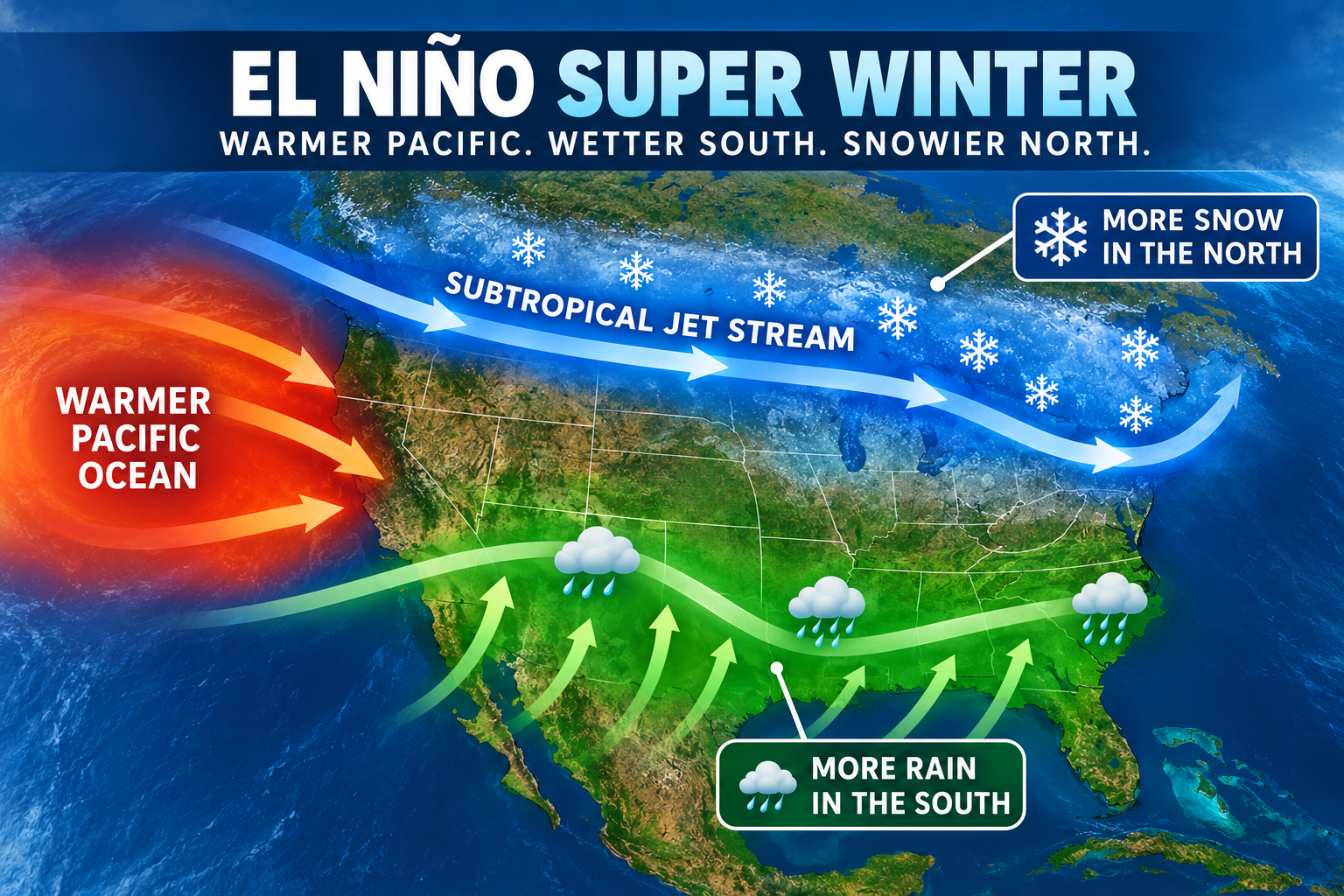
El Niño conditions alter the position and strength of the Pacific jet stream across North America. Instead of predictable, steady winter weather patterns, regional markets experience extreme thermal swings. Extended periods of unseasonal warmth are frequently interrupted by sudden, deep freeze events driven by displaced polar air masses. These erratic swings generate intense volatility in energy markets because regional supply systems must adjust rapidly to wild shifts in demand.
Natural gas demand spikes and heating load shifts
Natural gas serves a dual role in the modern energy ecosystem, functioning as the primary fuel source for space heating and a major fuel source for marginal electric power generation. When a sudden cold snap hits during an El Niño winter, heating demand surges instantly across residential, commercial, and industrial sectors.
This rapid draw on natural gas reserves drains storage fields faster than normal production can replenish them. As storage levels drop, regional basis prices and Henry Hub futures experience immediate upward pressure. Facilities operating on variable or unhedged natural gas arrangements see their heating bills climb rapidly, directly impacting quarterly operating margins.
Regional grid strain across PJM, ERCOT, and ISO-NE
The electrical grid experiences distinct operational challenges depending on regional infrastructure and market design. Regional transmission organizations must balance real-time electricity demand with available generation assets during extreme weather events.
- PJM Interconnection: Serving the Mid-Atlantic and Midwest, PJM relies on a diverse fuel mix. Heavy winter heating demand can strain natural gas delivery pipelines, forcing dual-fuel generators to run on back-up oil or triggering high spot market prices for electricity when demand peaks.
- ISO New England (ISO-NE): New England faces geographic pipeline import constraints. During prolonged winter freezes, natural gas pipeline capacity gets prioritized for home heating. This dynamic leaves power generators competing for limited gas supplies or burning expensive alternative fuels, causing real-time wholesale electricity prices to spike dramatically.
- ERCOT (Texas): Texas weather patterns during El Niño winters often feature sudden, extreme ice storms and dramatic temperature drops. Unprepared generation infrastructure combined with rapid spikes in heating demand creates extreme market price volatility across the ERCOT system.
Core risk factors for commercial and industrial energy buyers
Commercial and industrial energy buyers face financial risks that extend far beyond standard volumetric usage fees. Weather-driven volatility multiplies cost exposure through specific market mechanisms that require careful management.
Unhedged spot market exposure
Flexibility is valuable in stable market conditions, but unhedged spot market exposure during a turbulent winter presents severe financial danger. Companies relying heavily on real-time index pricing without defined risk caps expose their operating budgets to extreme pricing events. When wholesale natural gas or electricity prices multiply during a cold snap, index-only contracts pass those costs directly through to the customer. A single week of severe winter weather can destroy an annual utility budget if proper protective structures are absent.
“We consistently see the same pattern with unhedged clients,” said Justin Vissat, Kb3 Advisors managing partner. “They treat spot exposure as a budgeting afterthought until a single cold snap wipes out a year of savings. The cost of a hedge is always easier to justify after the fact. Our job is to make that case before the weather does.”
Peak demand charges and capacity cost surges
Energy costs are determined by when you use power, not just how much power you consume. Grid operators assess capacity and transmission charges based on facility usage during peak system load hours.
Winter weather shifts the timing of system peak events. Electric heating systems, industrial process ramps, and commercial building pre-heating cycles often create sharp morning and evening peak demand windows. If your facility draws maximum power during a system-wide winter peak, your organization locks in higher baseline capacity charges that inflate utility bills for the entire subsequent billing cycle.
Aligning your energy procurement strategy with weather volatility
Navigating weather-driven market movements requires an adaptable energy procurement strategy tailored to your organization’s specific operational needs and financial risk tolerance. A robust procurement plan balances cost stability with market opportunity, protecting your bottom line while allowing room to participate in favorable market dips.
Fixed, block-and-index, and layered contracting models
Choosing the right contract structure is your first line of defense against winter market swings. Every organization maintains a different tolerance for risk, meaning there is no single solution for every commercial portfolio.
- Fully Fixed Contracts: A fully fixed contract locks in your volumetric energy rate for a set term. This option offers maximum budget predictability, shielding your financial statements from weather spikes. It prevents your business from taking advantage of market downturns during mild spells.
- Block-and-Index Contracts: This hybrid approach allows high-use facilities to purchase a fixed block of energy to cover their core baseline load while letting remaining fluctuating demand run on index pricing. This structure guards against extreme volatility while preserving operational flexibility.
- Layered Hedging: Layered contracting involves buying portions of your projected energy needs over time in structured tranches. Buying future supply in systematic blocks months or years in advance smooths out weather-driven market peaks and valleys, securing competitive rates without placing a single high-stakes market bet.
Proactive risk management via the market intelligence desk
Timing matters just as much as contract structure for proactive energy risk management. Energy markets continuously digest meteorological forecasts, gas storage reports, and global commodity trends. Waiting until a severe cold front appears on consumer news channels guarantees you will purchase energy at peak prices.
A proactive approach relies on continuous market monitoring. Analyzing weather projections and wholesale commodity movements allows your team to identify optimal purchasing windows before cold weather triggers price surges. Securing hedges during shoulder seasons or mid-winter market dips keeps your organization ahead of market panics.
“Timing a hedge isn’t about predicting the weather perfectly,” said Vissat. “It’s about never being the last buyer in the market when a cold front hits. We give clients lead time, so their procurement decisions are driven by data, not panic.”
Weather-resilient planning
Managing commercial energy strategy across multiple locations, varied utility territories, and shifting regulatory frameworks requires specialized expertise and clear data visual analytics. Complete visibility over portfolio-wide energy data is necessary. Fragmented utility bills and scattered spreadsheets are replaced with centralized dashboards, real-time tracking, and clear executive reporting to simplify complex data sets and provide the clarity required to execute precise risk management choices.
“Clients don’t come to us because they want another vendor relationship. They come to us because their energy spend has gotten too complex to manage on a spreadsheet,” said Vissat. “Once leadership can see the whole portfolio in one place, risk management stops being reactive and starts being a real energy strategy.”
Whether managing commercial real estate, manufacturing plants, or multi-state franchise networks, Kb3 Advisors delivers the expert direction needed to protect your operational budget. Let our team help you prepare your enterprise for winter market volatility with an energy strategy built on data, discipline, and market insight.
Sources
- El Niño & La Niña (El Niño-Southern Oscillation) . climate.gov. Accessed September 21, 2026.
- Short-Term Energy Outlook. eia.gov. Accessed September 21, 2026.
- FERC, NERC Review Shows Bulk-Power System Improvements… ferc.gov. Accessed September 21, 2026.
