

Energy procurement in deregulated markets is no longer just a line item you hand off and forget. In places like Texas, Illinois, and the Northeast, what you pay for electricity comes down to how the market is structured, when contracts are signed, and how risk is managed across your portfolio. The bill that shows up each month is tied to wholesale prices, local rules, and the fine print in your agreements, not just a simple cents-per-kilowatt-hour quote.
Leaders who approve contracts without that context can inherit risk that only shows up when the next price spike or policy shift hits. Quick quote rounds and last-minute renewals worked when power was more predictable. Today, organizations that take energy procurement seriously lean on specialists who track market signals daily, explain regulatory changes in plain language, and bring clear options to the table. That support helps academic, commercial, and industrial leaders treat energy less like a moving target and more like a managed part of their long-term strategy.
How deregulated markets shape retail electricity decisions
In a traditionally regulated state, the local utility handles generation, delivery, and customer pricing under the supervision of regulators. Customers have limited choices and little say in how their power is sourced. Deregulated markets break that model apart. Retail suppliers compete for your business, and behind the scenes, wholesale prices rise and fall every hour as supply, demand, and fuel costs shift across the regional grid. That setup pushes more responsibility onto large buyers, whether you run a campus, a manufacturing plant, or a commercial real estate portfolio.
Retail electricity rates in regions such as ERCOT, PJM, and ISO New England reflect a mix of market rules, capacity charges, and local constraints. A rate that looks attractive on a simple comparison chart can behave very differently once unusual weather, policy changes, or shifts in the generation mix hit the system. Energy procurement specialists keep track of how each region works and how those rules are evolving. When they share that insight with your team in everyday language, you gain a clearer picture of what you are signing up for, not just what you are paying on day one.
Why contract timing is a strategic driver in energy procurement
Many organizations still start the renewal process a few months before a contract expires. That habit puts a lot of weight on whatever the market is doing in a narrow window of time. In deregulated regions, the timing of your decisions can matter as much as which supplier you choose. Wholesale forward prices move based on natural gas costs, expectations for future weather, planned retirements or additions of power plants, and the growth of renewables. In some periods, prices for future years are relatively low long before you need to sign, then climb as new risks or headlines appear.
Energy procurement specialists keep an eye on these trends throughout the year. They might suggest locking in a portion of your load early, leaving some room to move later, or adjusting contract terms to reflect what the market is signaling. Leaders do not need to live in price charts to benefit from this. You simply need a trusted specialist who can say, in clear terms, what the market is offering right now, what it might mean for your budget, and what options you must act or wait.
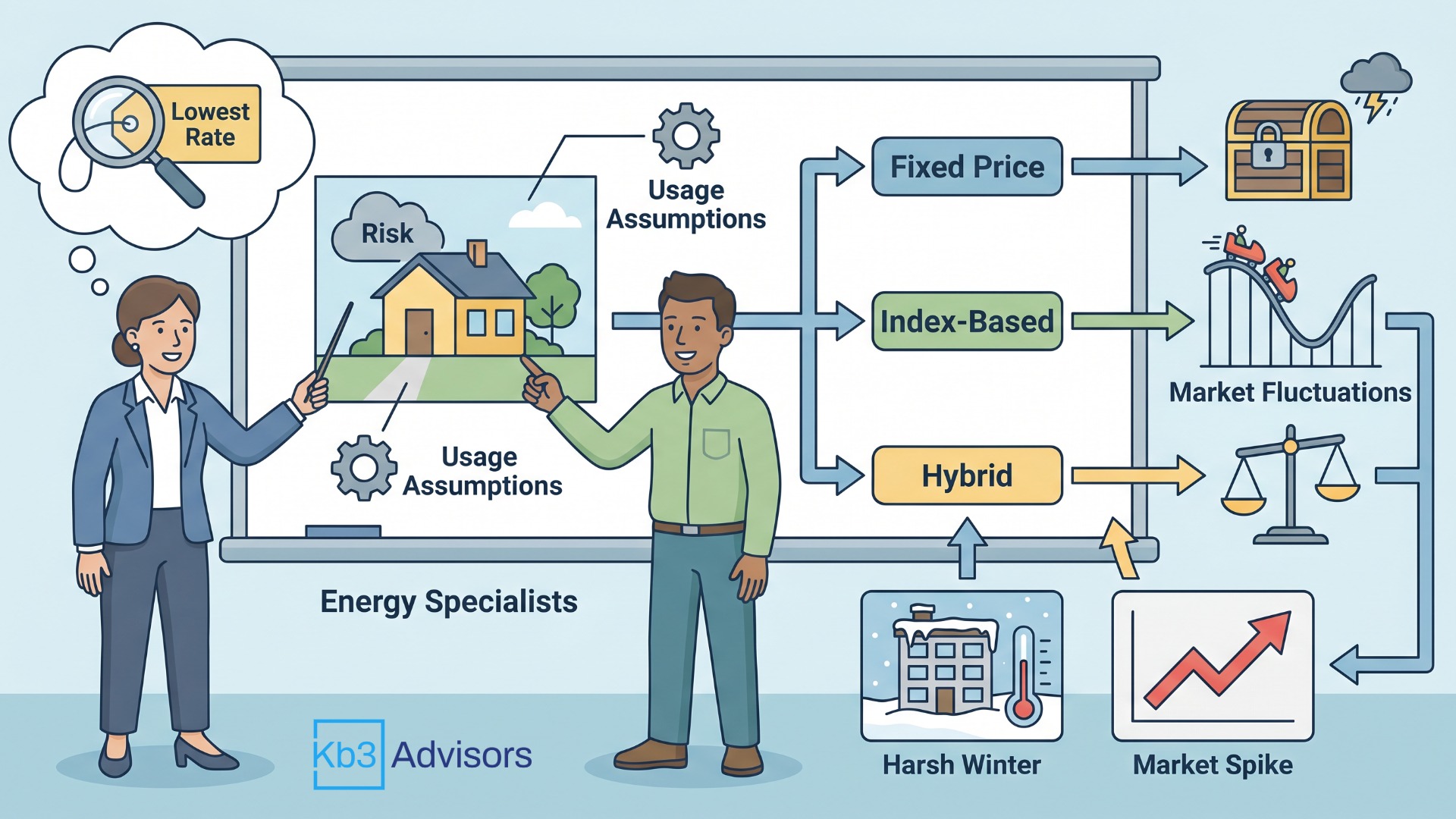
From lowest price to right risk in energy procurement
It’s easy to fixate on the lowest quoted rate when comparing offers. The problem is that a low rate can hide risk that shows up later. Every supply offer reflects assumptions about how you will use power, how rules will change, and how prices might move over the term of the deal.
A fixed all-in price can feel safe from a budgeting standpoint, yet there may be built-in premiums during volatile periods or clauses that pass certain charges back to you. Index-based pricing ties some or all your cost to the wholesale market. That can create savings when conditions are calm or trending downward, while exposing your organization to sharp cost increases when markets spike. Hybrid approaches combine elements of fixed and index pricing to balance stability and flexibility.
Energy procurement specialists walk through these tradeoffs with you using plain examples and simple scenarios, not technical jargon. Together, you can look at how each option would behave during a harsh winter, an unexpected load drop, or a new campus building. The goal shifts from bragging about a single low rate to feeling comfortable with how your energy spend behaves when things change.
What true energy procurement specialists do for leaders
Not every player who offers to help with your energy brings the same level of support. Some brokers focus mainly on collecting quotes and presenting side-by-side comparisons. That kind of help can save time, but it does not provide a full picture of risk and strategy. Energy procurement specialists such as Kb3 Advisors spend more time understanding your organization and your priorities.
They ask about budget pressures, enrollment or production changes, sustainability goals, and board expectations. Then they bring in what they are seeing in markets like ERCOT, PJM, and the Northeast. That includes new rules on capacity, changes in the mix of gas, nuclear, and renewables, and upgrades or bottlenecks on the grid.
The output for your team is not just a spreadsheet full of numbers. It is a set of clear options that explain how contract structure, timing, and supplier choice affect cost and risk over several years. Charts, simple tables, and short briefs make it easier to share these decisions across finance, facilities, and leadership. This kind of partnership feels less like working with a vendor and more like adding a specialized advisor to your team.
What executives should expect from an energy procurement strategy
Leaders in academic, commercial, and industrial settings juggle many priorities, and energy is often one of several large cost centers. A well-built energy procurement strategy respects that reality. It gives you a simple view of how much of your future load is covered, what you are paying, and where you are exposed to market swings. Good reporting doesn’t bury you in hourly data. It highlights key metrics such as how your contracts line up with your fiscal planning cycle, where major renewals sit on the calendar, and how sensitive your budget is to weather or new policies.
Regular briefings should explain, in straightforward terms, what a new rule in PJM or a policy change in the Northeast might do to your costs. Energy procurement should also connect with other plans, such as new building projects, shifts in operating hours, or investments in efficiency and on-site generation. When a firm like Kb3 Advisors manages this process with you, the outcome is a repeatable way to review options, update your strategy, and move contracts through internal approvals without last-minute surprises.
Take the next step toward smarter energy procurement
Treating energy procurement as a one-off purchasing task leaves your organization reacting to markets instead of planning around them. Deregulated markets for electricity will keep changing as new technologies, policies, and customer demands take hold. Leaders who want fewer surprises and more control over their budgets work with specialists who live in these markets every day and can translate that knowledge into clear choices.
Kb3 Advisors partners with academic institutions, commercial portfolios, and industrial operators to bring that level of support to the executive table. The team watches key regions closely, tracks how rules and prices are shifting, and builds procurement plans that reflect your goals, not just current conditions. If you’re ready to move from last-minute renewals to a more deliberate approach, now is a good time to talk. Schedule an executive market strategy session with Kb3 Advisors to review your current contracts, highlight hidden risks, and design an energy procurement plan that fits the way your organization operates.
Sources
- Power Market Structure. epa.gov. Accessed June 16, 2026.
- US Electricity Markets 101. rff.org. Accessed June 16, 2026.
- How are retail prices formed in restructured electricity markets. sciencedirect.com. Accessed June 16, 2026.
