

Electricity and natural gas strategies for fitness chains create a powerful opportunity to control costs in facilities with high HVAC and hot water demand. Fitness clubs depend on reliable heating, cooling, lighting, and abundant hot water to deliver the member experience their brand promises, which means energy sits at the center of operational and financial performance.
A typical fitness chain runs long operating hours and energy-intensive amenities. Large open workout areas require consistent temperature control. Locker rooms, showers, steam rooms, and saunas draw steady hot water and gas loads. Pools and wet areas often operate every day with strict comfort expectations. When these loads combine across multiple locations, energy spend grows quickly. If procurement strategies do not match the realities of usage patterns and operating hours, chains pay more than they need to and face unpredictable bills that complicate budgeting.
Smart procurement decisions start with understanding how each site consumes electricity and natural gas in detail. Fitness chains that treat energy contracts as strategic tools rather than simple rate agreements can match contract structures to actual load profiles. This shift turns energy from a volatile cost into a managed element of margin protection and long-term planning.
Why fitness chains have unique electricity and natural gas profiles
Fitness chains do not behave like typical office buildings or small retail spaces when it comes to energy. Their operations revolve around member comfort and equipment performance, which both rely heavily on electricity and natural gas. HVAC systems run for long stretches to maintain consistent temperature in large volumes of air. Lighting remains intense in workout areas and studios. Sound systems and cardio equipment add additional electrical load. All this activity continues early in the morning, through peak commuting hours, and often late into the evening.
On the gas side, pools and wet areas create a persistent draw. Gas-fired boilers heat pool water and maintain temperatures that members expect every time they swim. Showers generate continuous hot water demand as traffic moves through locker rooms. Steam rooms and saunas create concentrated thermal loads that rely on natural gas or electric heating elements, often operating during peak occupancy times. These loads do not fluctuate randomly. They follow distinct patterns tied to member routines and class schedules.
Multi-location chains add another layer of complexity. Some sites sit in hotter climates with heavier cooling needs. Others face harsh winters that drive heating loads higher. Building design, insulation quality, and equipment age all vary. Yet the company still needs one cohesive view of energy risk and cost at the portfolio level. Electricity and natural gas strategies for fitness chains must acknowledge this diversity while creating unified direction for procurement and budgeting.
Understanding usage patterns and operating hours
A fitness chain can’t build smarter procurement strategies until it understands when, where, and how each location consumes energy. Energy usage patterns reflect operating hours, membership behavior, and equipment deployment. Early morning openings attract members who train before work, which increases HVAC and lighting demand before sunrise. After-work peaks create dense usage periods with high occupancy, intense equipment use, and maximum hot water demand in showers and wet areas. Weekends may follow different patterns, with family swim times, longer stays, and extended use of saunas and steam rooms.
Electricity usage often spikes when many systems run together. HVAC units, lighting, equipment, and sound systems push demand higher during peak attendance. Demand charges on electricity bills respond to these peaks, which can account for a significant portion of total cost. Hot summer days with heavy cooling requirements amplify these spikes, especially in facilities with large glass areas or high ceilings.
Natural gas consumption behaves differently but still connects closely to operating hours. Pools demand steady heating, although outdoor temperature, cover use, and occupancy patterns can shift the load. Showers create variable but predictable demand around morning and evening peaks. Steam rooms and saunas often run during high-traffic times, which concentrates gas usage in specific windows. These patterns mean that procurement strategies should account for baseline loads and seasonal variations rather than treating gas use as flat.
To design effective strategies, fitness chains benefit from granular data. Interval metering and detailed utility bill reviews reveal when peaks occur and how long they last. Load profiles show daily and seasonal patterns that help decision makers link specific operational behaviors to costs. Once leaders see these relationships clearly, they can align contract terms, pricing structures, and risk management tactics with real-world patterns instead of relying on broad assumptions.
Electricity strategies for high HVAC and lighting demand
Electricity sits at the center of comfort and experience in fitness clubs. Members expect consistent temperature, bright and safe spaces, and reliable equipment operation every time they visit. High HVAC demand in large open areas increases sensitivity to weather. Hot days drive cooling loads higher as systems work to maintain target temperatures against external heat. Cold days force heating systems to run longer, especially in older buildings or those with less insulation.
Procurement strategies need to consider this variability. Fixed price contracts can offer cost stability for chains that simply want predictable bills across changing conditions. Market-based or hybrid structures can make sense for operators willing to accept some exposure in exchange for potential savings when prices fall. The right choice depends on the chain’s risk tolerance, budget priorities, and confidence in forecasting.
Contract length matters as well. Long terms might fit a stable portfolio with limited planned changes. Shorter terms can provide flexibility when chains anticipate major renovations or equipment upgrades that could alter load patterns. Planned investments in more efficient HVAC, LED lighting, or building improvements should influence whether leaders lock in rates for many years or keep options open.
Demand charges require special attention. Procurement strategies alone cannot solve demand issues, but awareness of demand behavior can guide complementary operational changes. Chains can examine high-demand periods and look for opportunities to minimize peaks, such as staging equipment use, adjusting temperature setpoints, or optimizing scheduling for certain energy-intensive activities. With better electricity and natural gas strategies for fitness chains, leaders can pair procurement decisions with operational insights to keep costs under control without sacrificing member comfort.
Natural gas strategies for pools, showers, and wet areas
Natural gas plays a critical role in fitness clubs that offer pools, abundant hot water, steam rooms, and saunas. These amenities attract members and differentiate brands, yet they also introduce substantial and consistent thermal loads. Pool heating can consume large volumes of gas, especially in cooler climates or poorly insulated facilities. Showers run throughout operating hours, and wet areas often create peak demand after workout sessions or group classes.
Procurement strategies for natural gas start with understanding baseline usage. Pools and hot water systems often create a minimum level of consumption that persists regardless of season, with additional demand layered on during colder months. Chains can design contract structures that reflect this mix of base load and seasonal variation. For example, they may choose to secure fixed pricing for a portion of expected volume while allowing some flexibility for swing volumes that respond to weather.
High demand in wet areas also suggests opportunities for efficiency projects. Upgrading boilers, improving insulation around pools, installing high-efficiency shower heads, or adding heat recovery systems can reduce gas consumption. Procurement strategies should anticipate these changes. Contracts that lock in rigid volume commitments without room for efficiency improvements might create penalties or mismatches. Flexible structures that recognize potential efficiency gains make it easier for chains to pursue projects that lower long-term consumption.
Careful attention to risk from commodity price swings also matters. Natural gas markets respond to supply and demand factors, which can create periods of elevated prices. Structured purchasing strategies that spread buying across time, set caps for certain volumes, or combine fixed and indexed components can help chains manage exposure. Coordinated electricity and natural gas strategies for fitness chains allow leaders to consider the full picture of thermal and electrical loads instead of making decisions for each fuel in isolation.
Aligning energy procurement with multi-location operating hours
Multi-location fitness chains rarely operate identical schedules in every facility. Some sites are open 24 hours a day. Others run limited hours on weekends. Regional differences in member behavior can shift peak times. Time zone differences mean that a chain with locations across states or countries experiences peaks at different clock hours. Procurement strategies that ignore these variations risk misalignment between contract terms and real operational needs.
Aligning procurement with operating hours starts with mapping each location’s schedule and load profile. Leaders can identify shared patterns, such as morning and evening peaks common to most sites, while also spotting outliers, such as a club near a business district that sees heavy midday traffic. This mapping helps chains decide whether to treat all contracts the same or segment locations into groups with distinct strategies.
A portfolio-level view allows for coordinated decisions. Chains can standardize certain contract features across locations to simplify management while still tailoring pricing structures or term lengths where necessary. They may choose to align expiration dates in certain regions to negotiate as a group. In other cases, staggering expirations can reduce the risk of renewing too many contracts during an unfavorable market period.
Operating hours also influence how chains plan for demand management. Locations with intense evening peaks might receive special attention for demand reduction initiatives. Sites with more balanced usage throughout the day might focus on overall efficiency. When contracts reflect these realities, including any tariff structures tied to time-of-use or demand charges, procurement becomes a tool that supports each site’s operating model instead of working against it.
Building smarter procurement strategies around usage
Smarter procurement starts with data and ends with contracts that fit both the numbers and the business. Many chains still focus primarily on rate comparisons when they consider electricity and gas contracts. While price matters, it tells only part of the story. A truly effective strategy builds from the ground up, with careful analysis and thoughtful design.
The process begins with collecting and reviewing utility bills, meter data, and operational information across all locations. Teams look for patterns in usage, demand, and cost. They identify which sites show consistently high HVAC loads, which sites drive hot water demand through pools or wet areas, and where anomalies appear that might indicate billing errors or equipment issues. This diagnostic stage reveals the true behavior of the portfolio.
Next, chains segment locations based on load profile, climate, and amenity mix. Sites with gas-heated pools and saunas might form one group, while smaller clubs without wet areas form another. Urban sites with high occupancy and extended hours might require different terms than suburban locations with more predictable patterns. Segmenting allows procurement strategies to reflect meaningful differences rather than treating all facilities as identical.
With segments defined, decision makers design contract structures that suit each group. They select appropriate combinations of fixed and market-based pricing, adjust term lengths to match capital plans, and incorporate risk tolerance for demand and price variance. They connect these choices to budget forecasting, planning for how energy costs will interact with revenue and margin targets.
This approach ends with a clear procurement strategy that replaces rate chasing with deliberate, data-informed decisions. Electricity and natural gas strategies for fitness chains become part of long-term planning, and leaders gain confidence that contracts support operating realities instead of ignoring them.
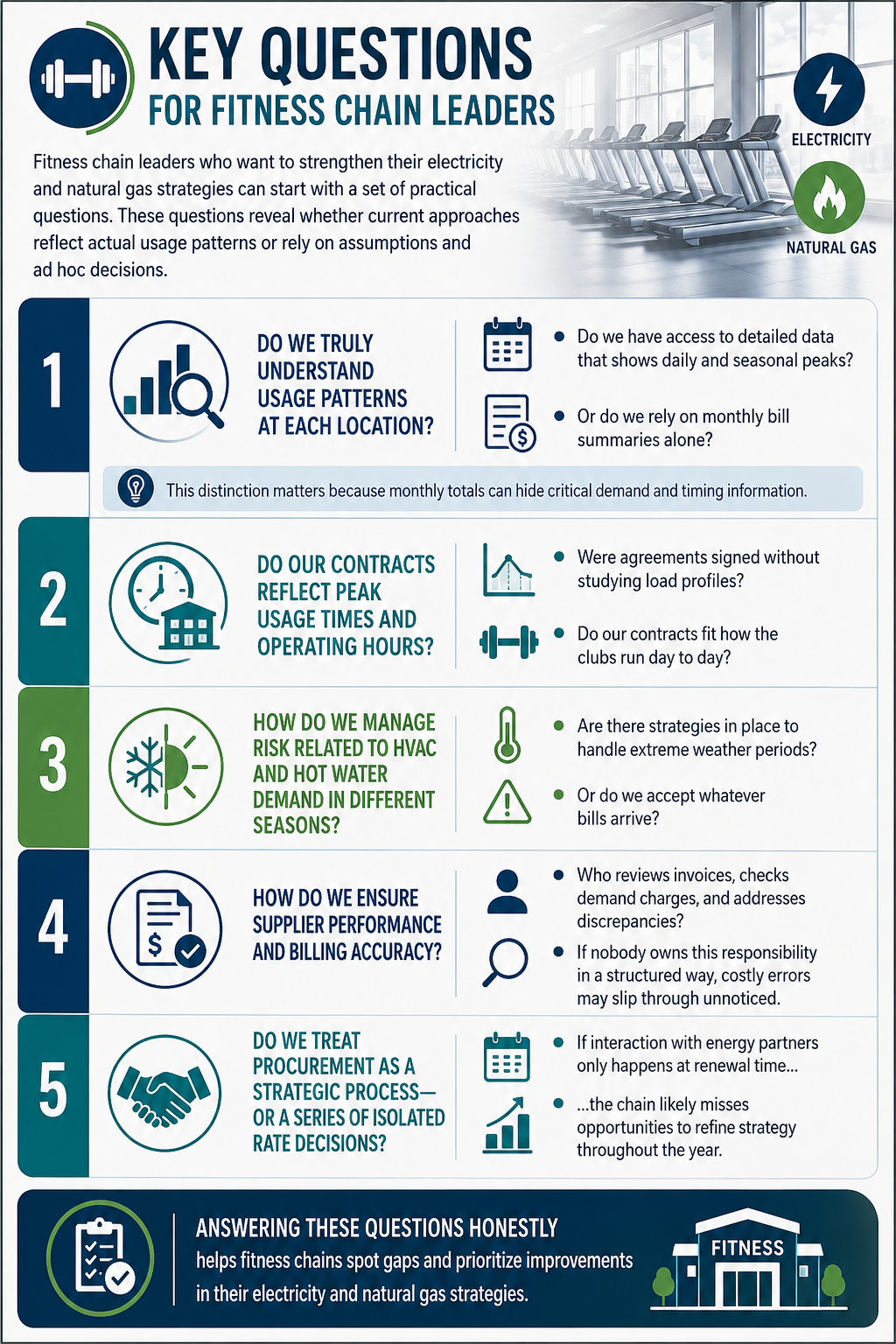
Key Questions for Fitness Chain Leaders
Fitness chain leaders who want to strengthen their electricity and natural gas strategies can start with a set of practical questions. These questions reveal whether current approaches reflect actual usage patterns or rely on assumptions and ad hoc decisions.
First, consider whether the organization truly understands usage patterns at each location. Do leaders have access to detailed data that shows daily and seasonal peaks, or do they rely on monthly bill summaries alone? This distinction matters because monthly totals can hide critical demand and timing information.
Next, ask whether current contracts reflect peak usage times and operating hours. If agreements were signed without studying load profiles, they might not fit how the clubs run day to day. Leaders should also examine how the organization manages risk related to HVAC and hot water demand in different seasons. Are there strategies in place to handle extreme weather periods, or do teams accept whatever bills arrive?
Another important question involves supplier performance and billing accuracy. Who reviews invoices, checks demand charges, and addresses discrepancies? If nobody owns this responsibility in a structured way, costly errors may slip through unnoticed. Leaders should also ask whether they treat procurement as a strategic process or a series of isolated rate decisions. If interaction with energy partners only happens at renewal time, the chain likely misses opportunities to refine strategy throughout the year.
Answering these questions honestly helps fitness chains spot gaps and prioritize improvements in their electricity and natural gas strategies.
Turn high HVAC and hot water demand into a strategic advantage
Electricity and natural gas strategies for fitness chains should reflect the reality that your facilities run on comfort, experience, and reliability – not generic utility contracts. High HVAC and hot water demand means your energy footprint carries more risk and more opportunity than a typical commercial space. When contracts ignore load patterns and operating hours, energy costs feel random. When strategies match how and when your members use your clubs, energy becomes a controllable part of your business model.
Treating energy as strategic instead of incidental changes the conversation in the boardroom. Leaders gain visibility into how HVAC, pools, showers, steam rooms, and saunas affect margins across locations. Budget forecasts become more credible because they reflect real demand behavior rather than broad estimates. Decisions about expansion, renovations, and efficiency investments become more confident when you understand how those moves will interact with electricity and natural gas contracts.
Kb3 Advisors can help you make that shift. Ouer team examines your portfolio, analyzes usage patterns, and reviews current agreements with an eye toward high HVAC and hot water demand. We design electricity and natural gas strategies for fitness chains that align rates, terms, and risk with your operating hours and member experience. If you want energy contracts that work for the way your clubs run, connect with us today to schedule a portfolio review. Start turning your energy profile from a source of uncertainty into a strategic advantage for your fitness brand.
Sources
- BuildingsBench: A Large-Scale Dataset of 900K Buildings and Benchmark for Short-Term Load Forecasting. osti.gov. Accessed July 20, 2026.
- Energy Audit of a Fitness/Leisure Centre. tudublin.ie. Accessed July 20, 2026.
