
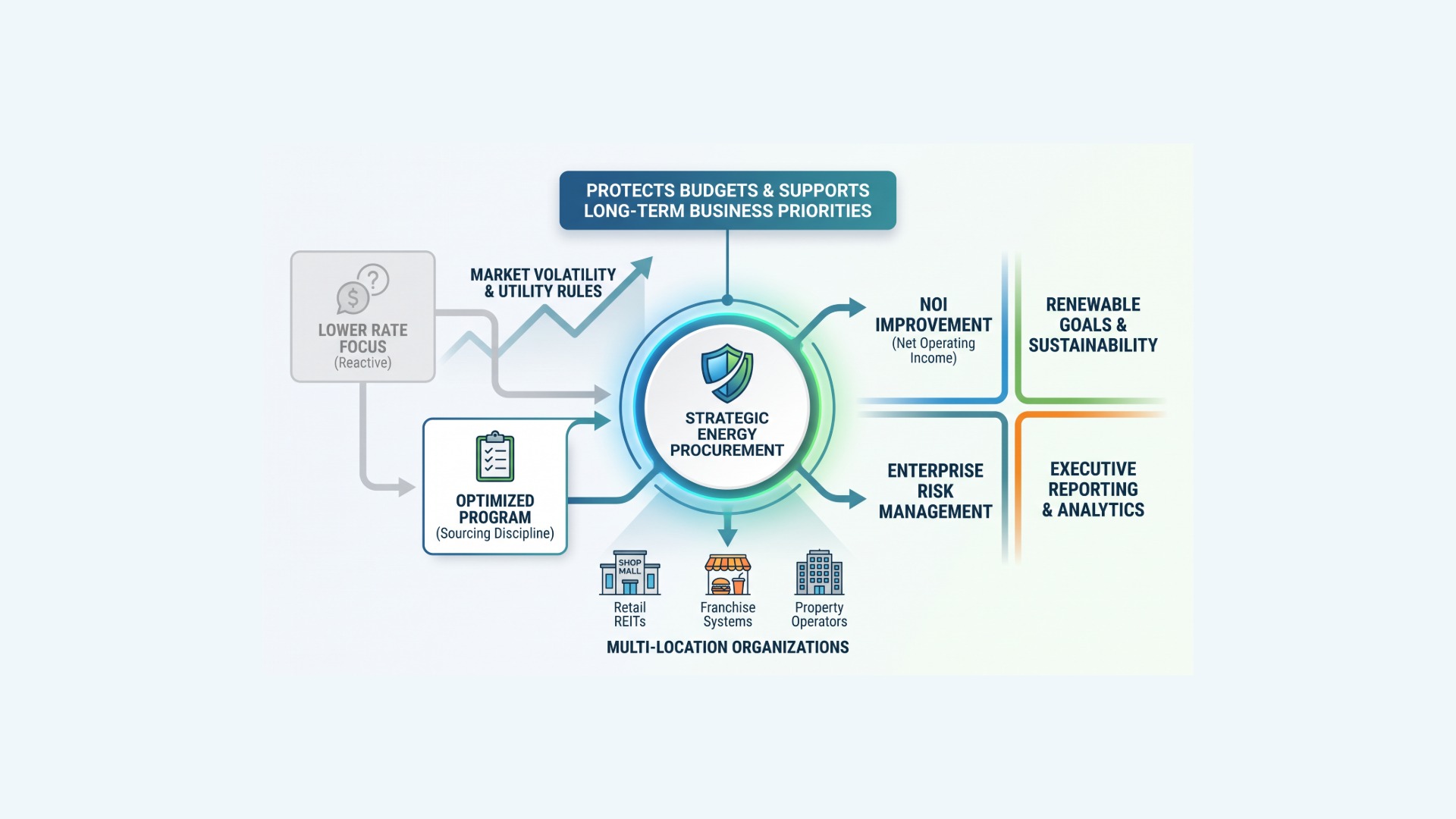
Strategic energy procurement is more than finding a lower electricity or natural gas rate. It protects budgets and supports long-term business priorities for multi-location organizations.
Retail REITs, franchise systems, and property operators face complicated energy decisions. Markets move quickly, contracts expire, and utility rules differ by state. Energy spending also affects margins, forecasts, operating income, and long-term planning.
A reactive approach creates financial pressure. Teams may face rushed renewals or inconsistent contract terms. Budget surprises can then affect business plans and leadership confidence. An optimized program improves sourcing discipline and portfolio visibility. A strategic program takes the next step. It connects energy procurement with net operating income, renewable goals, enterprise risk management, and executive reporting.
That connection matters because energy is a recurring operating expense. Unplanned price increases reduce margins and weaken budget performance. A disciplined strategy helps leaders make decisions before urgency limits their choices.
The goal isn’t to use one contract structure everywhere. Leaders should assess market conditions, expected demand, contract terms, and financial priorities. This process gives organizations more control while preserving needed flexibility.
Predictable costs help protect NOI
Energy costs can affect net operating income for property owners and operators. When costs exceed budget, NOI can decline. Lease structures and tenant recoveries may offset some exposure, but they rarely eliminate it.
Retail REITs need greater certainty around recurring operating costs. Franchise operators face similar pressure across many sites. Unexpected electricity or natural gas increases affect property-level results and overall profitability.
Strategic energy procurement helps teams prepare before renewal deadlines arrive. Leaders can review supply options against expected usage and market conditions. They can then select structures that support approved financial targets.
The strategy may include fixed, indexed, or layered supply arrangements. Each option creates different tradeoffs between price certainty and market exposure. The best structure depends on the organization’s budget and risk tolerance.
Portfolio visibility also matters. Teams must identify unusual usage and unmanaged expiration dates. Inconsistent contract terms create unnecessary exposure across a large footprint.
Lower operating costs strengthen NOI and support property value. Property values often reflect income performance. Cap rates, lease provisions, recoveries, and market conditions still influence final valuation outcomes.
Renewable goals need financial discipline
Renewable procurement supports ESG progress without weakening financial controls. Organizations should first understand their energy load, budget, reporting needs, and risk tolerance. That foundation supports informed decisions across the portfolio.
Strategic energy procurement connects renewable options with a broader financial plan. It helps teams assess costs, contract terms, environmental claims, and long-term exposure. Sustainability leaders should work closely with finance and procurement teams.
Renewable energy certificates can support renewable electricity claims. Green tariffs may give eligible utility customers renewable supply options. Power purchase agreements offer longer-term renewable procurement and greater price visibility.
Each option deserves careful review. RECs offer flexibility across broad portfolios. Green tariffs depend on local utility programs and availability. PPAs may involve longer commitments and substantial credit requirements.
The Environmental Protection Agency explains that RECs represent renewable generation’s environmental attributes. It also recognizes that organizations may combine green-power procurement options.
The right renewable strategy depends on business priorities. Teams should consider cost, timing, emissions goals, and claim requirements. A phased plan can support measurable progress while preserving budget discipline.
Energy risk belongs in ERM
Energy risk affects budgets, operations, and long-term financial planning. It deserves a place within enterprise risk management. Many organizations still treat energy as a separate purchasing issue.
Strategic energy procurement helps leaders identify risks before they disrupt financial performance. These risks include market volatility, contract expirations, supplier problems, regulatory changes, and shifting energy demand. Each affects spending and operations across a large portfolio.
Scenario modeling makes those risks easier to understand. Teams can estimate the impact of higher commodity prices. They can also assess supplier failure, facility changes, and new utility charges. These scenarios convert market uncertainty into useful financial questions:
- How much spending faces a potential price increase?
- Which locations create the greatest budget exposure?
- What happens if a major contract expires during volatile conditions?
Counterparty risk also deserves close attention. Supplier credit quality, guarantee terms, collateral requirements, and termination rights affect contract value. Long-term renewable agreements require the same level of review.
Kb3’s risk-management guidance supports scenario and sensitivity analysis. These methods can help leaders assess potential exposure before making procurement decisions.
Report the metrics leaders need
CFOs and boards need more than a report on energy savings. They need clear insight into performance, exposure, and renewable progress. Effective reporting connects energy activity with business outcomes.
Strategic energy procurement supports a scorecard that finance leaders can understand. Budget variance shows whether actual costs match forecasts. Cost avoidance can show the value of proactive sourcing and risk-management decisions. Contract coverage is another important measure. It shows how much expected energy load has an active procurement strategy. It also identifies where the organization remains exposed to future market movement.
Renewable adoption rates can track progress toward corporate goals. REC retirement status supports renewable-energy claims. Counterparty concentration can identify overreliance on any single supplier. Scenario-based exposure offers a downside view. It estimates potential financial impacts under adverse market conditions. That measure can support conversations about risk tolerance and contracting decisions.
Budget variance, cost per kWh, ROI, emissions reduction, and certificate tracking are useful performance measures. These indicators show financial and environmental progress together.
Build a roadmap that lasts
Energy strategy should begin long before a contract expiration date. It requires portfolio visibility, shared goals, and a repeatable process. Finance, procurement, facilities, and sustainability teams should work from the same information.
Strategic energy procurement starts with a complete portfolio baseline. Teams need account data, usage details, contract terms, suppliers, rates, and expiration dates. Renewable commitments should also be documented and regularly reviewed. Leaders should then establish clear financial guardrails. These may include budget targets, approval limits, and defined risk-tolerance ranges. Teams can evaluate available supply options against consistent criteria.
Portfolio segmentation can improve decision-making. Locations differ in size, utility market, operating hours, and financial importance. One contract strategy may not suit every site. A multi-year procurement calendar reduces rushed decisions. It gives teams time to assess supply options and renewable opportunities. It also identifies priorities before market conditions become urgent.
The strategy should be reviewed often. Markets, load, locations, regulations, and ESG priorities can change. A strong roadmap adapts while maintaining disciplined financial oversight.
Don’t let energy risk control tomorrow
Energy decisions can create uncertainty or strengthen business performance. Waiting until markets spike or contracts expire limits available choices. A clear strategy gives leaders more time, insight, and control.
Strategic energy procurement can protect budgets, support NOI, and advance renewable goals. It can also strengthen risk management across a complex portfolio. That makes energy a managed business variable instead of an unpredictable expense.
Kb3 Advisors can help build a procurement roadmap for your organization. We align energy decisions with your locations, budget, ESG priorities, and risk tolerance.
Contact Kb3 Advisors today to turn energy procurement into a source of financial control, resilience, and long-term value.
Sources
- Overview of the Green Power Partnership. epa.gov. Accessed August 24, 2026.
- A Guide to Printed and Electronic Resources… tsapps.nist.gov. Accessed August 24, 2026.
- Federal On-Site Electricity Contracts. energy.gov. Accessed August 24, 2026.
