
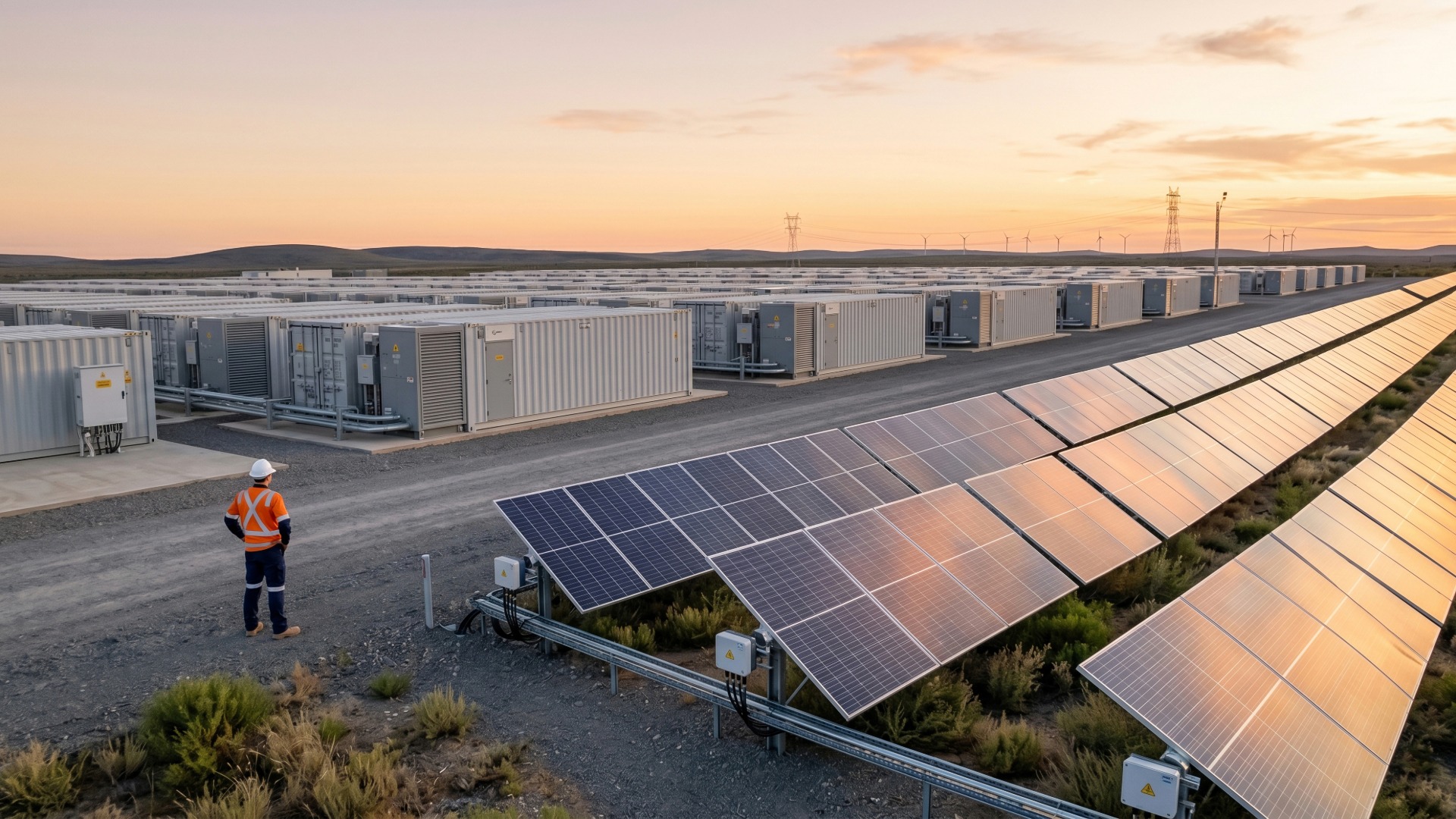
Your organization’s electricity bill reflects more than how much energy you consume. The timing of that consumption and the size of your highest demand peaks significantly impact what you pay. Battery storage gives organizations another way to manage those costs, storing electricity for use when purchasing power from the grid would be more expensive.
For commercial buildings, university campuses, municipal facilities and industrial operations, the opportunity extends beyond emergency power. A well-planned system reduces demand charges, shifts grid purchases away from higher-priced periods and supports critical operations during disruptions. The financial value depends on your electricity rates, operating patterns and system design.
The starting point is alignment. Battery storage should fit your organization’s energy strategy, financial priorities and operational needs.
Bringing together electricity procurement, demand-side services, risk management and reporting helps organizations make informed energy decisions. Doing so allows decisionmakers to examine where storage may fit within a broader plan for controlling costs and improving energy performance.
How battery storage creates financial value
A battery energy storage system, often called a BESS, stores electricity and releases it when needed. It can charge from the grid or an on-site energy source, such as solar panels. Its value comes from managing when your facility draws electricity from the grid, rather than simply reducing total energy consumption.
Two common savings opportunities are energy cost management and demand charge reduction.
Energy charges reflect the electricity your organization consumes, measured in kilowatt-hours. Demand charges reflect power demand, measured in kilowatts, under the utility’s billing rules. Some utilities calculate demand charges using the highest average demand recorded during a short interval within the billing period.
Storage can address these costs in different ways. Charging during lower-priced periods and discharging during higher-priced periods can reduce energy expenses under suitable rates. Discharging when facility demand rises can reduce the peak used to calculate demand charges.
These opportunities require a site-specific assessment. A facility with high demand charges and predictable peaks may have a stronger business case than one with relatively flat usage and limited price differences. Research from the National Renewable Energy Laboratory identifies demand charges as an important factor in commercial storage economics.
Reduce the cost of short demand peaks
A brief increase in electricity demand can affect a much larger portion of your monthly bill.
Consider a facility where cooling equipment, production machinery and other large electrical loads run at the same time. Even if that overlap lasts for only a short period, it may establish the peak that determines the facility’s demand charge. The exact effect depends on the utility’s measurement interval and tariff.
Battery storage can supply part of the facility’s power during that interval, reducing the amount drawn from the grid. This approach is commonly called peak shaving.
Successful peak shaving requires more than installing a battery. The system must have enough available energy when the peak occurs and enough discharge capacity to make a meaningful difference. Historical usage data helps identify whether peaks are brief, prolonged, predictable or irregular. Those distinctions influence storage economics and operating strategy.
Kb3’s demand-side services include facility benchmarking, historical usage analysis, load management and peak demand reduction strategies. That foundation can help your organization identify the cost drivers worth investigating before committing to an equipment solution.
Shift grid purchases away from expensive hours
Organizations on time-of-use rates may pay different electricity prices depending on when they consume power. Storage can charge during lower-cost hours and discharge during higher-cost hours, reducing purchases during expensive periods.
The opportunity is less straightforward when an organization has a fixed supply rate. A changing wholesale market price does not automatically create savings on a customer’s bill. The assessment must reflect the rates and charges the organization pays, including applicable demand charges.
This makes procurement review an important part of the storage conversation. Your organization needs to understand its supply agreement, utility tariff and usage profile before assigning a dollar value to shifting electricity purchases.
Kb3’s electricity procurement services include contract negotiation and agreement structuring across fixed and variable pricing options. Reviewing those arrangements alongside demand-side opportunities helps connect storage decisions to the way your organization purchases electricity.
The practical question is whether changing the timing of grid purchases will reduce your costs enough to justify the project.
Put on-site solar to work when it’s needed
Solar production and facility demand don’t always line up. A building may generate electricity during the day but require significant power later, when solar output declines.
Battery storage can retain some of that solar generation for later use. It can also help smooth variations in solar output and supply stored electricity during periods when the sun is not shining.
For organizations evaluating solar, storage adds another planning consideration. The assessment should examine when generation occurs, when the facility needs electricity and how the utility treats exported power. Research shows that solar and storage can work together to reduce demand charges, although the results vary with load patterns and tariff design.
Storage also requires careful sustainability assessment. A battery doesn’t generate renewable electricity on its own. The energy source used to charge it remains relevant to the organization’s goals.
Kb3’s sustainability services connect renewable energy procurement, carbon reduction planning, and financial objectives. That broader perspective can help keep a solar-plus-storage proposal connected to the organization’s energy priorities.
Plan for resilience with clear expectations
Backup power can strengthen a storage project’s business case, especially where outages interrupt essential services or costly operations.
Solar and storage can support critical facilities during electrical disruptions. However, outage performance depends on the system’s configuration, available stored energy and the loads it must serve. Appropriate inverter and electrical arrangements are necessary for operation when grid power is unavailable.
A resilience assessment should begin with operational priorities:
- Which equipment must remain powered?
- How much electricity does that equipment require?
- How long must it operate?
- Can some loads be disconnected during an outage?
- Will the battery work alongside solar or existing backup equipment?
These questions help distinguish a system designed primarily for bill savings from one designed to support critical operations.
There is also a planning tradeoff. Energy held in reserve for an outage is not available for immediate peak shaving. The project needs an operating strategy that always reflects the organization’s priorities rather than assuming maximum savings and maximum backup availability.
Build a business case around your facilities
A credible storage proposal starts with your data, not a general savings claim. Storage economics varies across customers. National research emphasizes the need for case-by-case evaluation.
The assessment should account for electricity bills, interval usage data, rate schedules, operating hours and anticipated changes in demand. It should also examine the full project cost and the assumptions behind projected savings.
Important questions include the following:
- Which charges will storage reduce?
- How frequently do the target peaks occur?
- What performance assumptions support the forecast?
- Which project and operating costs are included?
- What happens if facility usage or electricity rates change?
- How will results be measured after installation?
For multi-location organizations, the analysis should distinguish individual sites. A common organizational strategy doesn’t mean every facility needs the same solution. Different demand profiles and tariffs can produce different results.
Kb3’s facility benchmarking and analytics identifies operational differences and prioritizes opportunities across an energy portfolio. This creates a more focused starting point for evaluating where storage deserves deeper technical and financial review.
Connect storage with a broader energy plan
Storage should be evaluated alongside other ways to manage demand.
Load scheduling, automated controls and targeted operational changes may address some of the same cost drivers. Demand response programs may offer financial incentives for eligible operational flexibility.
The goal is to choose the right combination for your organization. A battery may be valuable at a facility with difficult-to-avoid peaks. Another location may benefit more from adjusting equipment schedules or improving load controls.
A smart solution is to bring energy procurement and demand-side considerations into the same discussion. Look for services that span electricity purchasing, risk management, sustainability, demand-side strategy and custom reporting. That breadth supports a more complete view of energy costs than an equipment proposal alone.
It also keeps the focus on measurable outcomes. Your organization needs a clear understanding of the problem being addressed, the expected financial benefit and the method used to track progress.
Start with the savings opportunity
Battery storage can give your organization greater control over peak demand, the timing of electricity purchases and the availability of power for critical operations. The strongest opportunities emerge when system design and operating strategy reflect the facility’s rates and energy needs.
Before selecting equipment, understand what drives your bill and where changes could create value.
Connect with Kb3 Advisors to discuss your electricity costs, demand patterns, and long-term energy priorities. Our procurement and demand-side services provide a starting point for identifying savings opportunities and considering how battery storage could fit into your organization’s energy strategy. Schedule a consultation to move from a general interest in storage toward a clearer, data-informed decision.
Sources
- Solar Integration: Solar Energy and Storage Basics. energy.gov. Accessed October 8, 2026.
- Identifying Potential Markets for Behind-the-Meter Battery Energy Storage… osti.gov. Accessed October 8, 2026.
- The Economics of Using Batteries to Reduce Installation Energy Costs. nps.edu. Accessed October 8, 2026.
